GoodWeave and Certification: What a Label Actually Guarantees
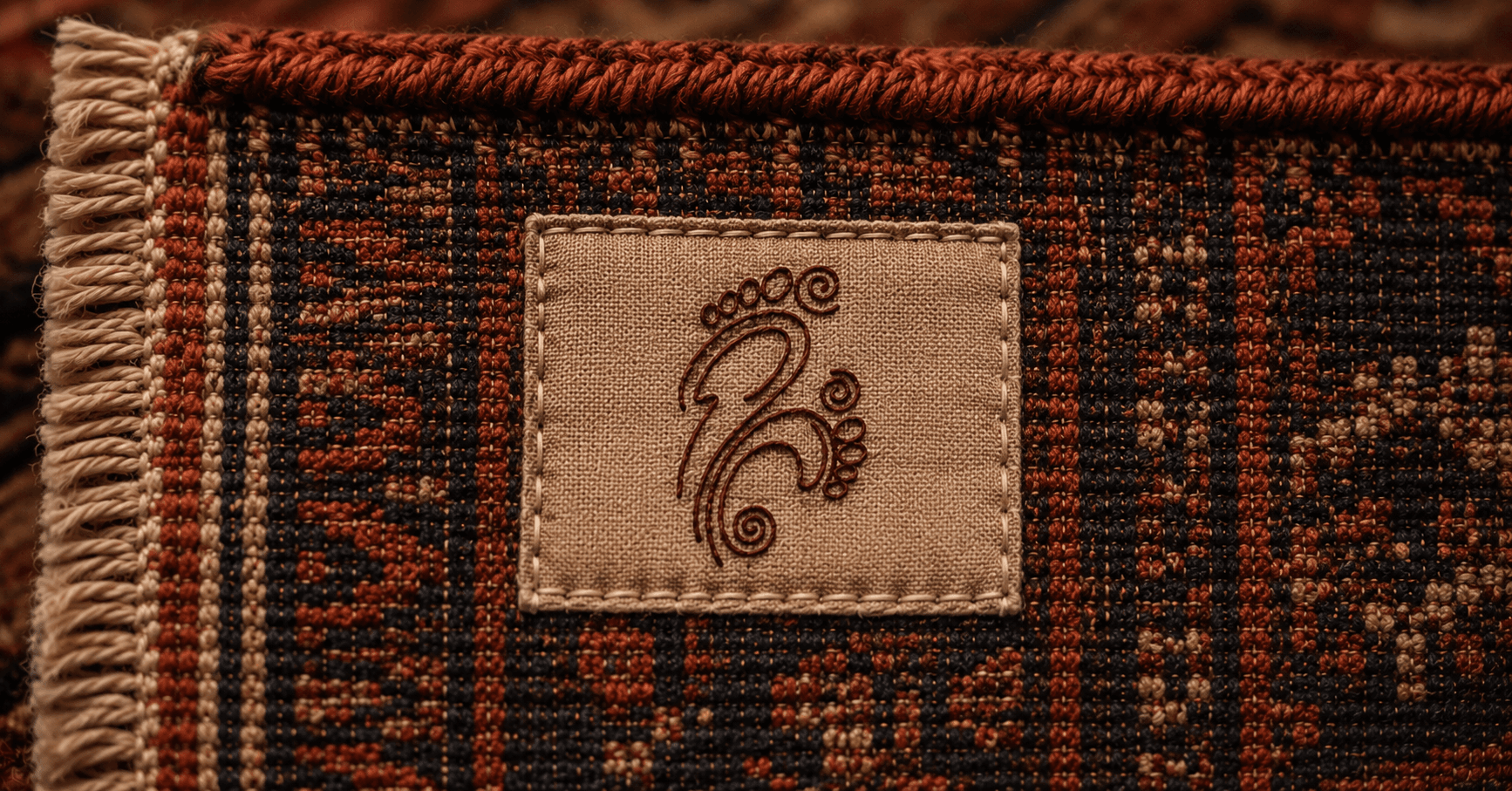
The rug industry has a history you need to know to understand its labels. In the eighties and nineties it became public to what extent children were working at looms across the carpet belt between India, Nepal and Pakistan. The answer was independent inspection systems, first among them RugMark, co-founded in 1994 by Kailash Satyarthi, later a Nobel Peace Prize laureate, and known today as GoodWeave. Anyone buying rugs for the European market today encounters three labels at the core, and they answer three different questions.
GoodWeave: who made it
GoodWeave is the most specific label in the industry because it was invented for it. Licensed producers commit to the exclusion of child, forced and bonded labor across the entire production, expressly including outsourced home looms, where abuse was traditionally least visible. Compliance is checked through unannounced inspections along the supply chain. Every certified rug carries a numbered label on the back that can be traced to its production, and license fees fund schooling and rehabilitation programs in the weaving regions.
Equally important is what GoodWeave is not: a quality mark. It says nothing about wool, knot density or durability. It answers the question of the hands, not the material.
GOTS: how it was processed
The Global Organic Textile Standard certifies textiles made of organically grown natural fibers and looks at the entire processing chain: fiber origin, chemicals used, wastewater treatment, plus social minimum criteria in the facilities. Two grades are defined, "organic" from 95 percent organic fiber content and "made with organic" from 70 percent. For rugs, GOTS is relevant wherever organic wool is claimed; it is the label of the ecological chain.
OEKO-TEX Standard 100: what is in the product
OEKO-TEX Standard 100 tests the finished product for harmful substances, from pesticide residues to heavy metals to banned dyes, against limit values that are regularly tightened and often exceed legal requirements. The label looks at neither working conditions nor the ecology of production; it answers whether the piece lying in the room is safe to live with. For bedrooms, children's rooms and sensitive contract areas, that is the relevant information.
Three labels, three questions
The logic fits in one line: GoodWeave checks who made it. GOTS checks how it was processed. OEKO-TEX checks what is in the end product. The labels do not replace one another, they complement one another, and none of them assesses the craft quality of a rug. A certified piece can be mediocre knotting; an outstanding piece can be made without any label.
What no label replaces
Labels document minimum standards, nothing more. What they do not replace is knowing the maker. Three questions every supplier should be able to answer concretely: in which workshop is the piece made, and can that be shown? How are the weavers employed and paid? Where do wool and dye come from? Whoever evades these has a problem, with or without a label; whoever discloses gives the label its weight in the first place. Real verifiability begins with the traceability of every single piece, and why this subject touches the core of our work is central to our commitment to fair rugs without child labor.
For the European market the situation is unambiguous: demonstrable supply-chain responsibility is not optional polish but a purchasing requirement, in retail as in contract work. Which proofs Carpetstory provides for your project we lay open transparently in the inquiry, including the things we are still building. Ask us the three questions; you will recognize us by the answers.