Durability in Contract Use: Rugs That Stand Up to Traffic
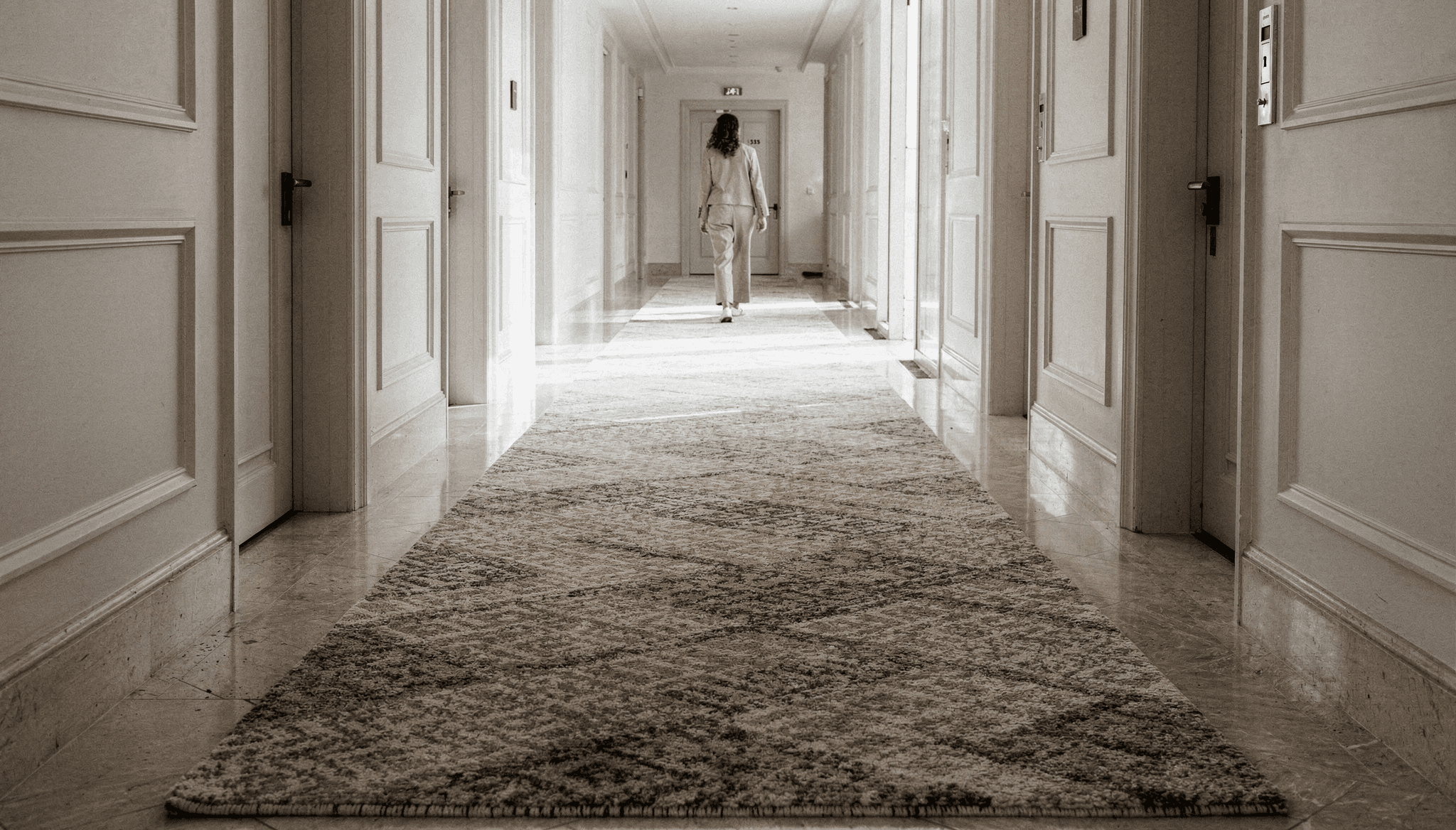
A hotel lobby forgives nothing. Thousands of steps a day, rolling luggage, grit from the forecourt, sun through the glass front: what lies here is tested like almost no other furnishing. That densely knotted wool rugs have passed this test for decades, in grand hotels as in boardrooms, is not luck. It is specification. This guide covers what actually ages a rug in contract use and which levers you have against it.
What ages a rug
Four forces work against every floor covering. The first and most underestimated is dirt: sand and fine grit migrate into the pile and act like sandpaper at the pile base with every step. The second is pressure, the constant crushing of fiber along walk paths and under furniture. The third is UV light, which can fade color. The fourth is moisture, whether as a cleaning mistake or carried in from outside.
The good news: all four can be specified against.
The four levers in the specification
Material first. Wool is unmatched in contract use because the fiber is elastic and recovers after compression, because its lanolin makes dirt adhere less, and because it is inherently flame resistant. Silk and bamboo silk are accent materials for low-traffic zones; they have no business in walkways.
Knot density second. The denser the knotting, the less room the pile has to shift and the less grit reaches the base. Robust contract qualities start around 100,000 knots per square meter; for corridors and lobbies, 150,000 and up is the sensible range. What the number means in detail is explained in understanding knot density.
Pile height third. A short pile of six to eight millimeters shows fewer walk paths, gives less resistance to luggage and service trolleys, and is far easier to keep clean than high pile. High pile belongs in the suite, not the corridor.
Construction fourth. A firmly set warp, clean selvedges and hand-finished ends decide how a rug ages at its edges, where load shows first.
Think in zones
No project is evenly loaded, so no rug program has to be either. A sensible gradation: the densest quality with short pile in entrance, corridor and lobby; medium density in restaurant and meeting areas; finer, softer qualities with silk content in suites, boardrooms and everything that represents rather than circulates. The budget flows to where the load is, and the character to where it works. How this gradation fits into a full project is shown in the contract and project guide.
Underlay and dirt barrier
Two unglamorous line items with outsized effect. An underlay prevents shifting and creasing, cushions every step and so reduces abrasion at the pile base; it extends the life of the piece noticeably and costs a fraction of it. And a consistent dirt barrier at the entrance, meaning sufficiently long walk-off zones before the first rug, stops sand and grit where they cannot yet do damage. The most effective rug protection lies three meters before the rug.
Care is part of the specification
Durability is not a state; it is the interplay of material and routine. Regular vacuuming without a rotating brush lifts dirt out of the pile before it grinds; a professional wash at multi-year intervals restores fiber and color. Both are plannable and belong in every contract concept from the start. The full routine is described in the care guide.
Correctly specified, a handknotted rug is not a delicate treasure but one of the longest-lived floor coverings that can be put into a building: a piece that after twenty years shows history, not wear.
Describe your areas and traffic to us; you will receive a specification recommendation per zone within two working days.