Wool, Silk and Bamboo Silk: The Materials of Genuine Rugs
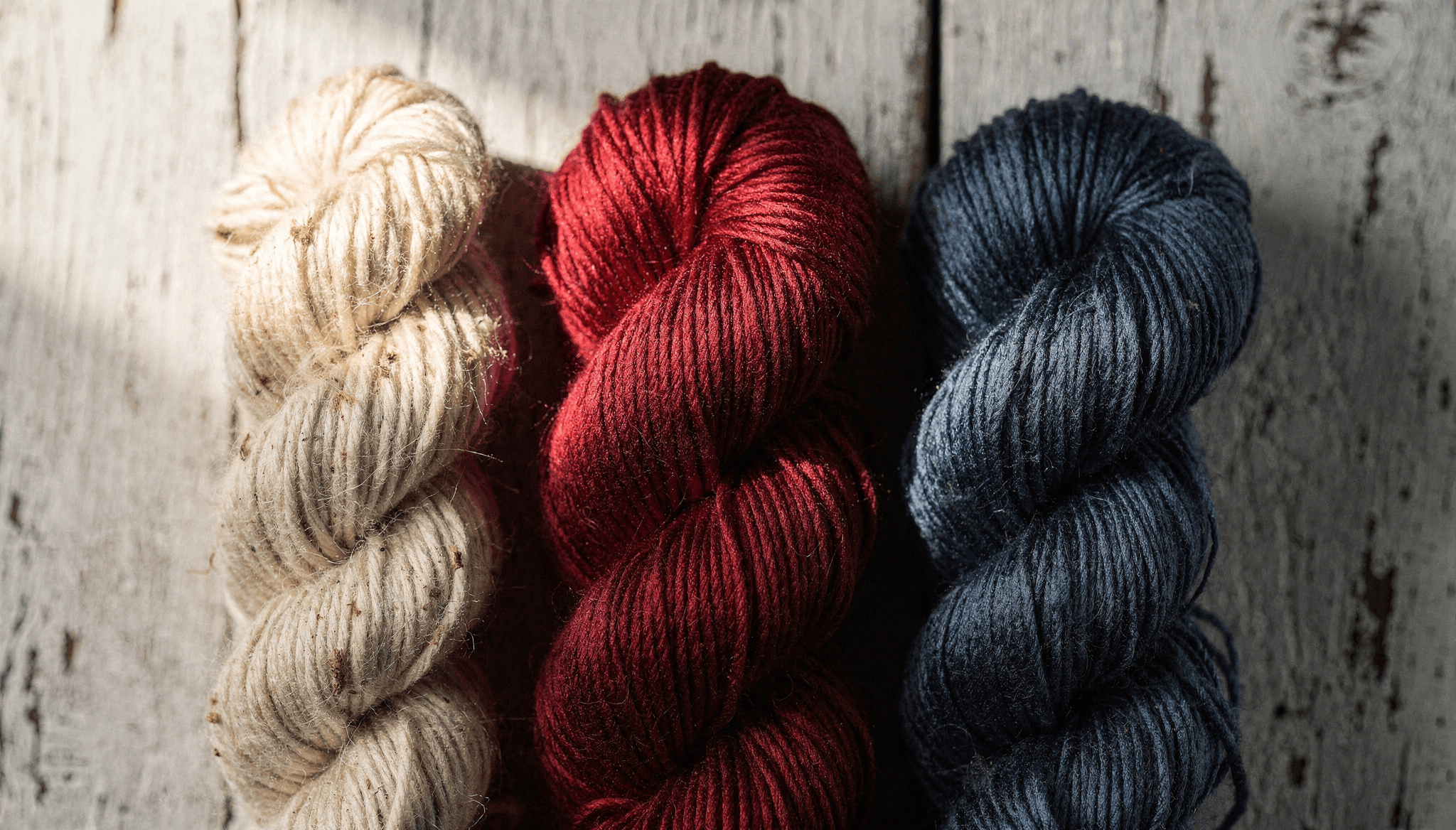
Before the first knot comes a decision that shapes everything after it: the material. It determines how a rug takes light, how it feels under the hand, how it ages and which rooms it can withstand. Three fibers carry this craft, one as foundation, two as voice, and knowing their natures changes how you read every piece.
Wool: the foundation
Virgin wool is not a casual term but a promise: wool from the shearing of living sheep, not reprocessed fiber. What this fiber achieves is explained by its build. Every wool hair is crimped like a fine feather and sheathed in microscopic scales. The crimp makes the fiber elastic: trodden down, it stands back up, which is why a wool pile forgives walk paths that would stay written into other materials. The scale layer and the natural wool grease, lanolin, make dirt and water adhere poorly; much of what lands on wool can be vacuumed away before it penetrates.
Two quiet qualities come with it. Wool buffers moisture, absorbing and releasing a remarkable amount without feeling damp, and so noticeably steadies a room's climate. And wool is inherently flame resistant, igniting only at very high temperatures and extinguishing itself, one reason it is without rival in contract use.
Carpetstory works with long-staple highland wool, whose long fibers spin into smooth, firm yarns, blended where the quality calls for it with New Zealand wool, which is especially bright and takes dye evenly. Over the years, a wool pile in use develops a soft luster that the material only yields through living with it: wool does not age, it matures.
Silk: the light
Silk is the fiber with which a rug begins to glow. Its secret lies in the cross-section: the filament from the silkworm's cocoon is nearly triangular and refracts light like a prism. That is why silk does not shine at the surface like a lacquer but from depth, and why a silk rug changes color with the viewing angle and the hour of the sun. Cool under the hand, featherlight and yet, for its weight, among the strongest natural fibers there are, silk takes dye with a brilliance wool cannot reach.
This beauty carries its price twice: in the material itself and in its sensitivity. Silk pile is less abrasion-resistant than wool and does not belong in walkways. Its realm is the fine things: pure silk pieces of the highest knot density, as Kashmir knots them, and accents in wool rugs, where single contours, blossoms or lines are set in silk and lift the drawing out of the field the moment light falls on it.
Bamboo silk: the honest alternative
Bamboo silk is the youngest of the three fibers, and honesty belongs in its portrait: despite the name it is not silk but a regenerated cellulose fiber, won from bamboo through the viscose process. What it can do, it does well: a silken shimmer that comes close to the original, a soft, flowing hand, clean dye uptake, a plant origin and a price well below silk.
What it cannot do, no one should conceal. The cellulose fiber lacks wool's spring; pressure marks and walk traces stay more visible. And it is moisture-sensitive, losing strength when wet and demanding restrained, expert cleaning. Bamboo silk therefore belongs where little is walked and nothing is spilled: in the bedroom, in representative zones, in pieces whose task is presence, not resistance.
The blend: wool carries, luster speaks
The smartest answer to most rooms is not an either-or but the combination: a foundation of wool that bears load and lasts decades, with drawing and highlights in silk or bamboo silk that bring the piece to life in light. Such blends join the durability of one material to the radiance of the other and are usually the best choice for representative rooms with real use.
Choosing by use
The rule is simple and holds: the more footsteps, the more wool. Corridors, living spaces and everything commercial belong to wool, ideally densely knotted and short-sheared; the specification side is covered in durability in contract use. Bedrooms, dressing rooms and quiet spaces open the field for silk content and bamboo silk. And for every material, care co-decides how long beauty lasts; the essentials are in the care guide.
What becomes of these fibers when the dyer's hand and the loom take over is the bigger picture: handknotted rugs from India.