Qualities

What a rug is made of, and how to tell.

Two ways of making, four fibres, one honest test: turn the corner over. Everything on this page can be checked with your hands on a sample.

Two ways of making

Knotted or tufted.

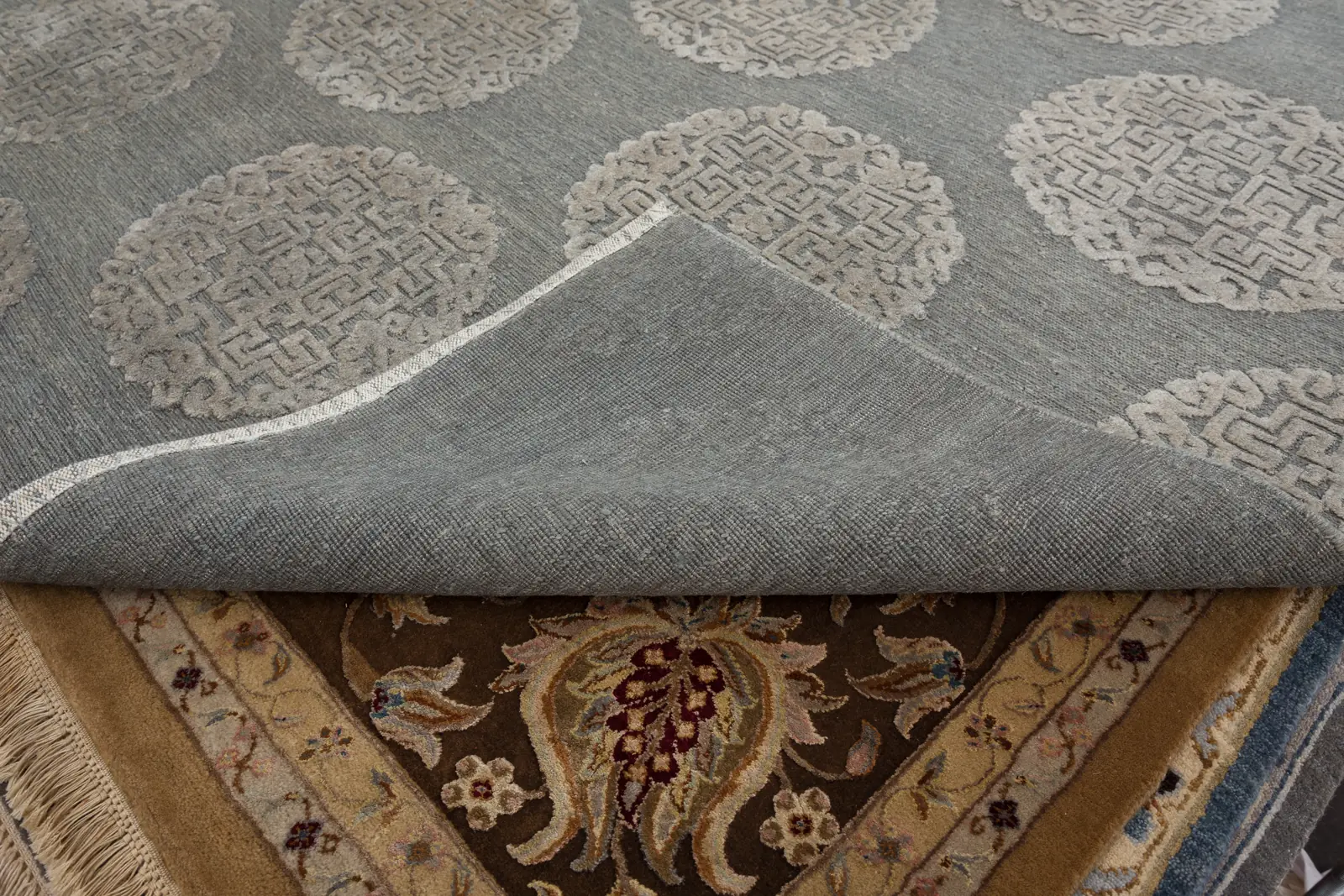
A grey hand-knotted rug folded back over itself, the pattern visible on the underside
A hand-knotted corner turned over. The back carries the whole pattern.

Hand-knotted

How it is made
One knot at a time, tied around the warp on a loom. The pile, the back and the fringe are one piece of cloth.
How to tell
Turn a corner over. The pattern is as clear on the back as on the front, and the fringe is the warp itself, not something sewn on.
Time to make
About a month for the yarn, then two to three months of knotting.
Fibres
Wool, wool and silk, or pure silk
Guide price
$20 to $60 per sq ft

Hand-tufted

How it is made
Yarn pushed by hand through a canvas stretched on a frame, then backed with cloth. Weeks of work where knotting takes months.
How to tell
The back is a plain cloth with no pattern on it. A tufted rug is the right choice for large rooms, bold shapes and calm fields of colour.
Time to make
About a month for the yarn, then three to four weeks of tufting.
Fibres
Wool and bamboo silk, or wool and viscose
Guide price
$10 to $20 per sq ft
See prices per square foot
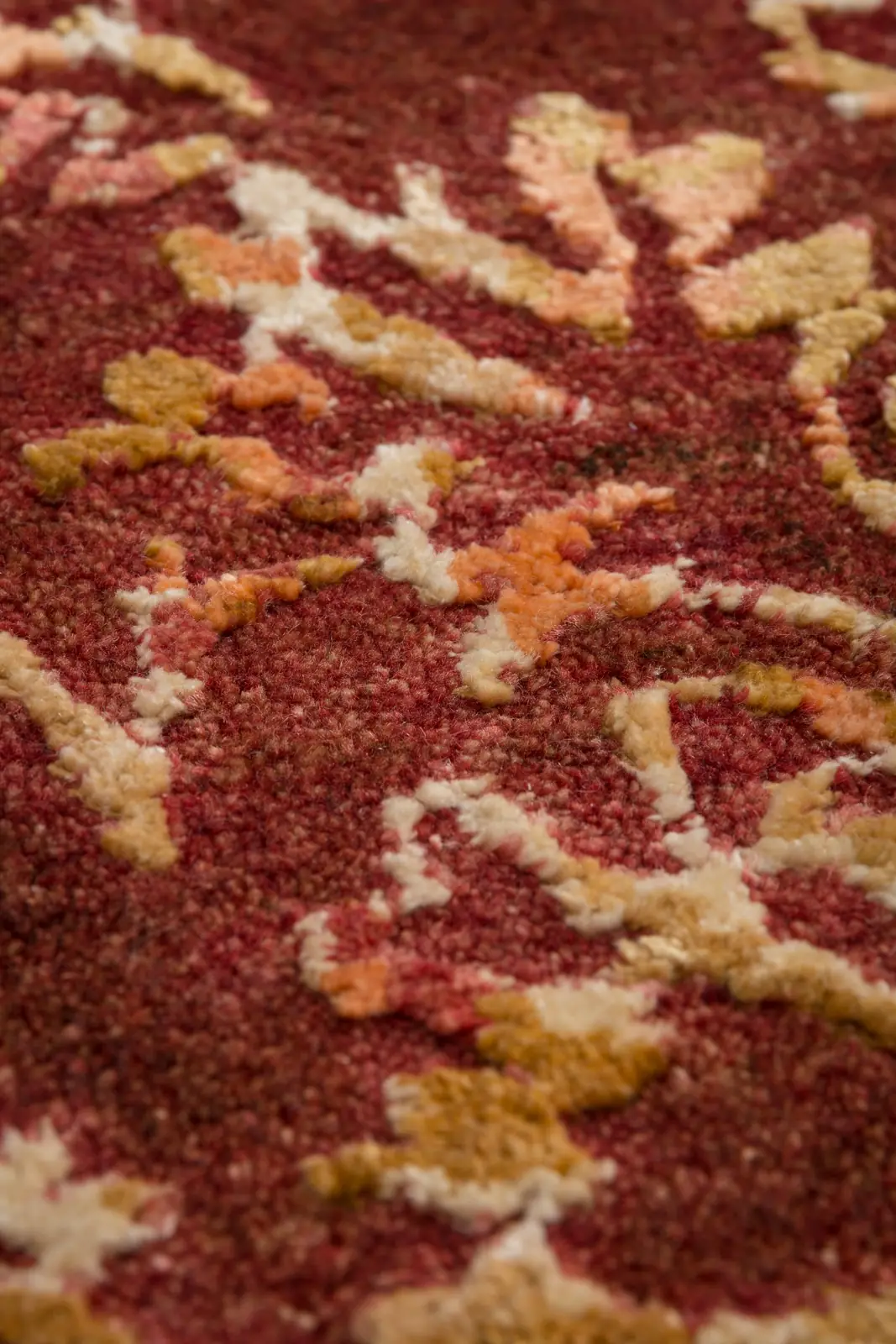
A close view of the pile of a red and ivory rug, the pattern standing slightly above the ground
Pile, close. Each tuft of colour is the cut end of a knot.
Knot density

Six to fourteen knots to the inch.

Density is how many knots sit along one inch of the rug. More knots let a line curve more finely, the way more pixels sharpen a picture, and they take longer to tie.

A bold geometric reads well at six or eight. A fine floral with thin stems wants twelve or fourteen. We weave across the whole range and choose the density with you, by the design.

6 to 8
Open, graphic designs and plain fields
10
The everyday fine rug
12 to 14
Fine florals and thin lines
Fibres

A short list of things that touch the floor.

Wool
From New Zealand. Long in the fibre and rich in lanolin, so it takes dye deeply and sheds dirt. The everyday floor.
Silk
Mulberry silk. Used for the pattern, where it catches the light differently through the day, or for the whole rug in the finest weaves.
Cotton
The warp and weft of a hand-knotted rug: the structure under the pile that the knots are tied to.
Bamboo silk and viscose
Plant fibres with a soft sheen, used in tufted rugs for the pattern or blended with wool. Softer than wool and less forgiving of spills, so we say where they are.
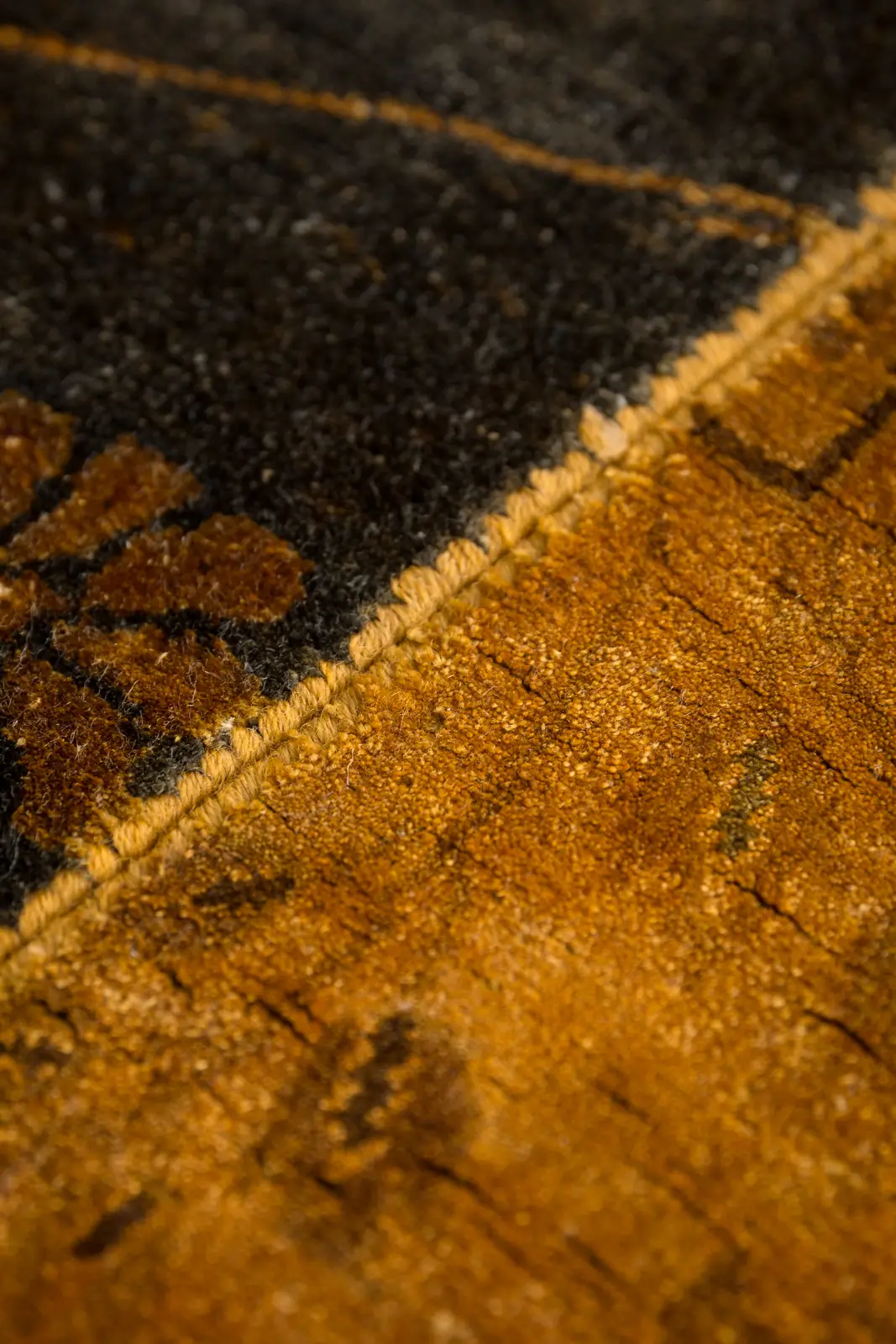
A close view of a rug where a dark matte pile meets a golden pile with sheen along a raised line
Two fibres in one rug: a matte ground against a field with sheen.
Colour

Dyed for the order.

Yarn is dyed after you approve the design, not taken from stock. A colour can be matched to a fabric, a paint code or a Pantone reference, and you see it as a woven sample before the rug begins. Small shifts of tone along a colour are part of hand dyeing and are left in.

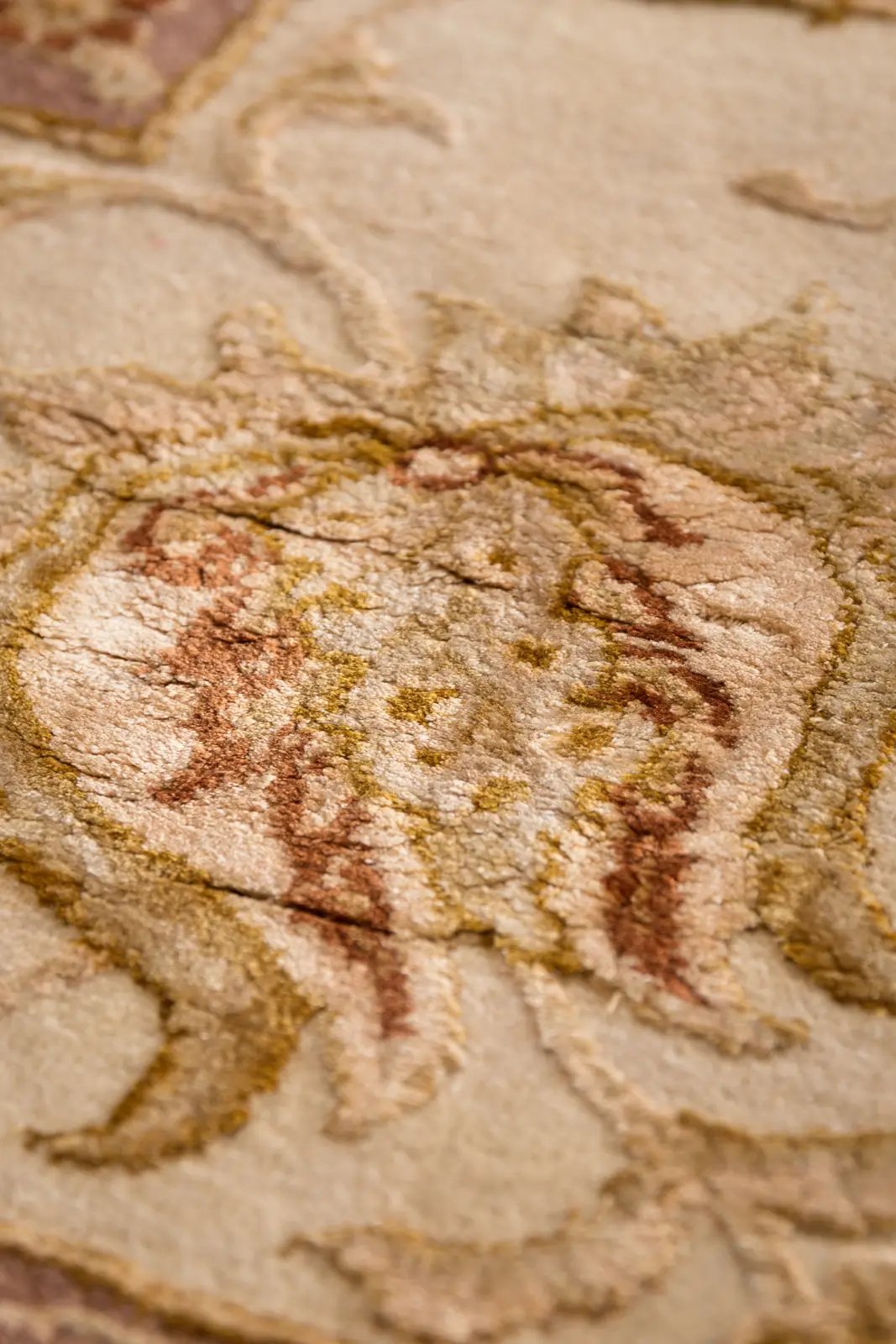
A close view of an ivory rug whose floral pattern is carved to stand above the surrounding pile
Pile carved in relief, so the flower stands above the ground.
Surface

The same design, four ways underfoot.

1
Cut pile
The loops are cut, for a soft, even surface.
2
Loop pile
The loops are left whole, for a firm texture that wears hard.
3
Cut and loop
Both in one rug, so the pattern shows in the texture.
4
High and low
Two or more pile heights, carved by hand so the pattern stands up.

Hold it before you decide.

A sample is one foot square, woven at the quality you chose. The first four are free.

Order samples